How Many AI Tools Are Actually Free? We Analyzed 724 (2026)
The phrase "free AI tools" is everywhere, so we checked how true it is. We went through the pricing model of every one of the 724 active AI tools in the ToolChase directory and sorted each into four buckets. The result is a clear picture of what "free" actually means in the 2026 AI market.
The headline numbers
Only 6% (44 tools) are genuinely free or open source with no paid upsell, such as Google Translate AI, DuckDuckGo AI Chat, Aider. The dominant model is freemium at 53% (386 tools): a limited free tier plus paid upgrades, including household names like ChatGPT, Claude, Cursor, Canva, Gamma, plus GitHub Copilot and Notion, which both run a free tier today. A further 36% (260 tools) are paid-only, like Intercom, which sells a 14-day trial rather than a free plan, and 5% sell only on enterprise or custom terms. So 59% of AI tools offer some free access, but for most the free tier is a sample, not the product.
Updated August 16, 2026: every figure on this page is recomputed from the current directory snapshot of 724 active tools, replacing the June numbers. GitHub Copilot (Free plan: $0/mo, 2,000 completions and 50 chat requests a month, re-verified against GitHub today) and Notion both count as freemium. Since June, 16 tools we tracked have been discontinued or absorbed; the study has the full graveyard.
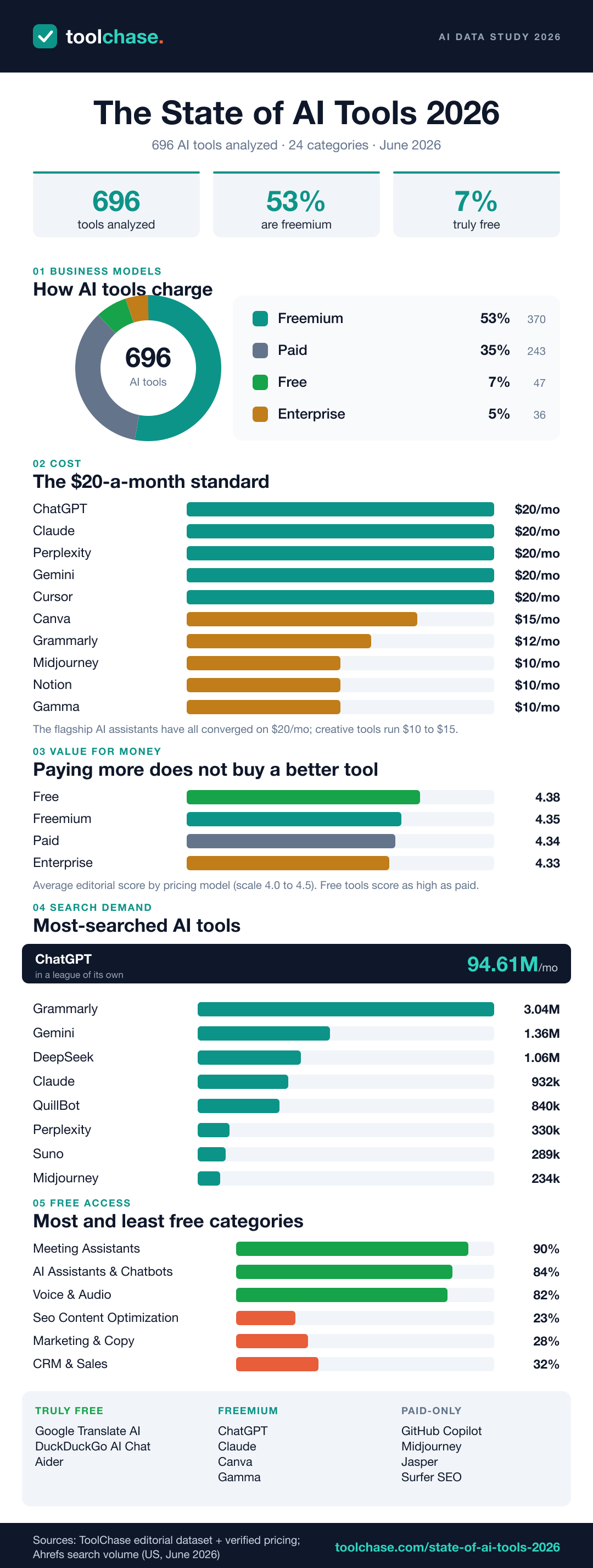
Which AI categories are most and least free
Free access is not spread evenly. Consumer-facing categories lean heavily free: voice and audio tools (87%), meeting assistants (82%), and image generators (82%) are the most generous. Categories that sell to businesses gate access behind paid plans: healthcare (7%), SEO (15%), and marketing (27%) tools are the least free. The full ranking for all 31 categories is in the State of AI Tools 2026 study.
What this means if you are choosing AI tools
A free tier is the best way to evaluate a tool, but read the fine print. Free plans commonly cap usage, limit exports, add a watermark, or restrict commercial use. If you work in a paid-heavy category like SEO or marketing, budget for a subscription from the start, because the genuinely free options are thin. And if "free forever" really matters, look first at open-source tools you can run yourself, which never move behind a paywall.
Get the full data
Free-vs-paid for all 724 active tools, the full category ranking, plus a downloadable PDF report, infographic, and the raw CSV dataset.
Read the State of AI Tools 2026 study →Frequently asked questions
How many AI tools are actually free?
Of the 724 active AI tools in the ToolChase directory, only about 6% (44 tools) are genuinely free or open source with no paid upsell. Another 53% are freemium, meaning they offer a limited free tier and charge for more, so most 'free' AI tools are really free-to-start, not free-to-scale.
What are the best free AI tools?
Top freemium picks that are powerful on their free tier include ChatGPT, Claude, and Canva. For a tested list, see our guide to the best free AI tools and the free AI tools with no credit card.
Are freemium AI tools worth it?
Freemium tiers are excellent for evaluating a tool before paying, but they usually cap usage, exports, or advanced features. Check the specific limits (and any watermarks or commercial-use restrictions) before relying on a free tier for production work.
Methodology: pricing model for each of the 724 active AI tools in the ToolChase directory, classified from current vendor plans and verified against official sources, August 2026. Discontinued and delisted pages are excluded. Full method in the study and our scoring methodology.